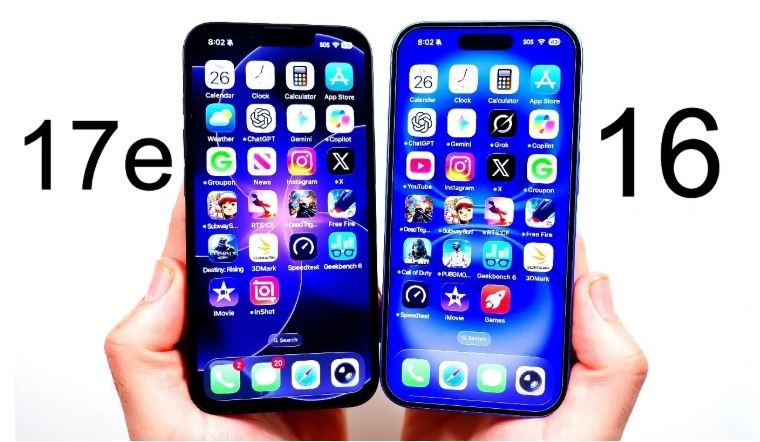
Apple’s iPhone lineup just keeps getting more confusing — and expensive. With the launch of the iPhone 17e, many consumers are asking: “Should I upgrade from the iPhone 16, or is the new model just hype?” Surprisingly, the answer might be simpler than you think: sometimes, the cheaper iPhone 16 is actually the smarter buy. Here’s why.
Design & Build: Minimal Differences
At first glance, the iPhone 17e and iPhone 16 look nearly identical. Both feature Apple’s signature flat-edge design, aerospace-grade aluminum frames, and Ceramic Shield glass. Screen sizes remain unchanged, with the 6.1-inch display offering similar color accuracy and brightness.
The iPhone 17e introduces subtle tweaks: slightly slimmer bezels and new color options. While attractive, these changes don’t significantly affect daily usage. For most users, the iPhone 16 still feels modern and premium.
Performance: Same Power, Less Price
Apple has always promised performance leaps with each generation. The iPhone 17e runs on the A18 Bionic chip, while the iPhone 16 features the A17 Bionic. Benchmarks show marginal improvements — about 10–12% faster processing and graphics performance.
However, real-world usage tells a different story. For social media, streaming, gaming, and even professional apps, the iPhone 16 handles everything effortlessly. The A17 Bionic is still more than capable, meaning most users won’t notice any slowdown or lag.
Camera: A Slight Upgrade That Doesn’t Justify the Cost
The iPhone 17e adds a slightly improved main sensor, better low-light performance, and a marginally smarter computational photography engine.
But here’s the kicker: the iPhone 16 already delivers stunning photos, even in challenging conditions. Unless you’re a content creator who needs every fraction of a percent in image quality, the difference is subtle and unlikely to justify paying extra.
Battery Life: Almost Identical
Battery improvements in the iPhone 17e are minimal — about 1–2 hours of extra screen-on time. Apple’s iOS 18 optimizations slightly favor the new model, but iPhone 16 users will find their battery life still excellent for daily tasks.
Price & Value: Why the iPhone 16 Wins
Here’s where the iPhone 16 shines. After the iPhone 17e launch, the iPhone 16 price dropped by $100–$150, depending on the storage variant.
- iPhone 16 (128GB): ~$799
- iPhone 17e (128GB): ~$899
You get almost identical performance, battery life, and a comparable camera at a lower cost. For most users, this is smarter spending — especially if you’re not chasing the latest specs for bragging rights.
iOS & Software Support
Both devices run iOS 18 and will likely receive updates for at least 5 years. This means your iPhone 16 will remain current, secure, and compatible with apps for years to come — the same as the iPhone 17e.
Who Should Buy the iPhone 17e?
- Users who want the absolute latest camera improvements
- Those attracted to new colors or minor design tweaks
- Tech enthusiasts who want the fastest chip, regardless of necessity
Who Should Stick With the iPhone 16?
- Budget-conscious buyers looking for maximum value
- Everyday users who prioritize performance and battery life over minor upgrades
- Anyone who doesn’t need the “latest and greatest” features
Final Verdict
While the iPhone 17e looks impressive on paper, the iPhone 16 delivers nearly identical performance, camera quality, and battery life at a lower price. For most users, the iPhone 16 is the smarter, more practical choice — proving that sometimes, “cheaper” truly means “smarter.”